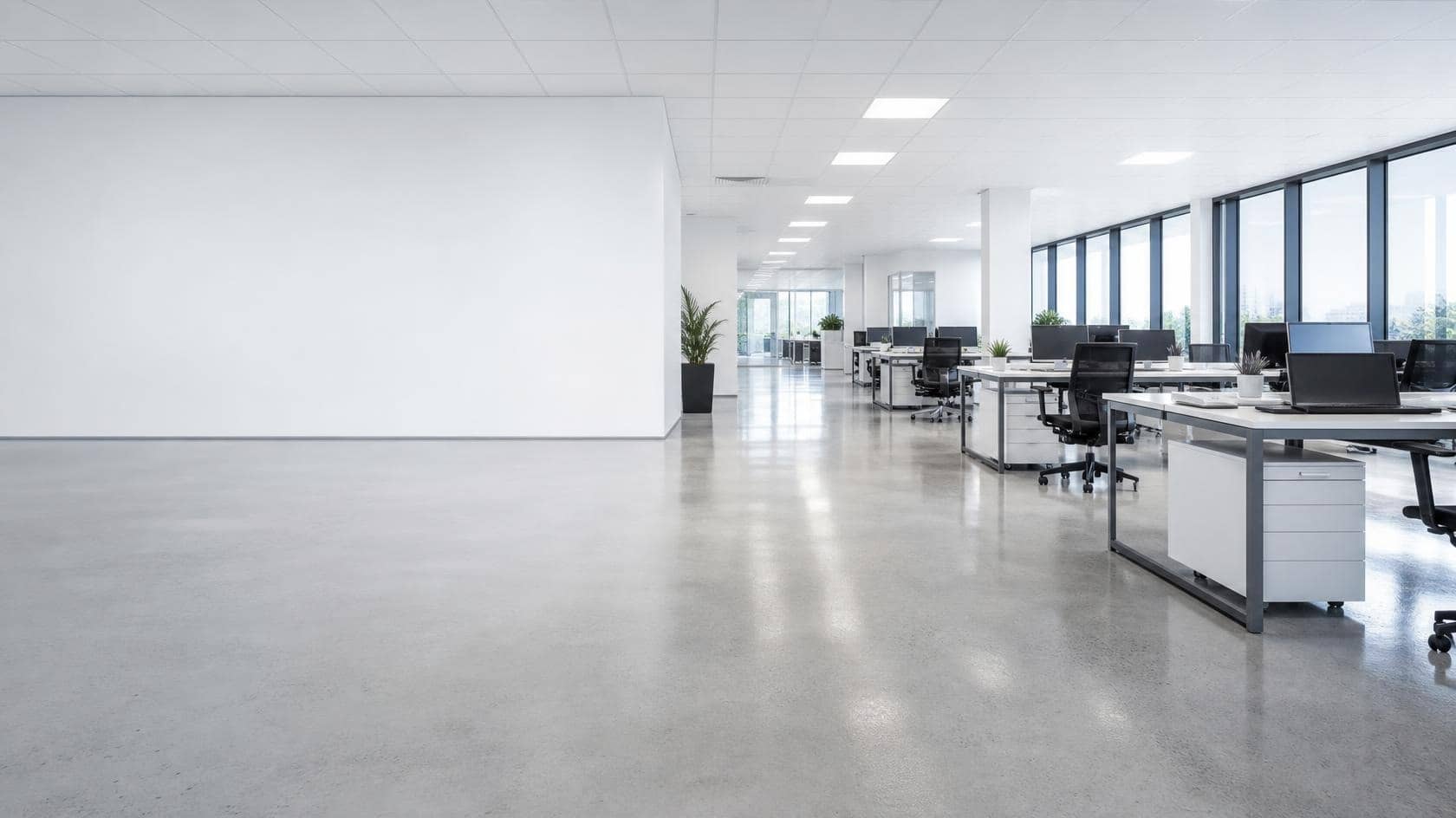
Three freshly serviced Australian commercial interiors: an office floor, a retail interior and a warehouse mezzanine

What a Better Cleaning Program Actually Changes.

Most of the programs we take over were not badly delivered. They were badly scoped. These worked examples show what changes when the program is rebuilt around how a site is actually used.

Case Studies

Most Cleaning Problems Are Scoping Problems

When we take over an existing contract, the issue is rarely that the previous cleaners weren't working. It is that the program they were given no longer described the building — inherited from a former tenant, priced on floor area, or written before a fit-out changed how the space is used.

Each example below follows the same shape: the problem the business had, what they needed, the program we built, and what changed.

Professional Services

Multi-tenant office floor, metropolitan CBD — around 40 desks

The Challenge

The cleaning schedule had been inherited from the previous tenant and never revised. Meeting rooms and the client-facing reception were on the same cycle as storage and back-of-house, so the areas visitors actually saw were inconsistent by mid-week while low-use areas were serviced more than they needed.

The Requirement

A program weighted toward the spaces the business is judged on, delivered outside business hours, with a named point of contact instead of a shared inbox.

Our Approach

  • A site assessment mapped traffic across the floor and identified reception, meeting rooms and end-of-trip facilities as the priority areas.
  • A daily program was built for those areas and for high-touch points, with a lighter scheduled cycle for storage and rarely used offices.
  • Periodic work — high dusting, internal glass and hard-floor treatment — moved onto a quarterly cycle so it no longer competed with the nightly visit.
  • Access was arranged after hours, with the same team rostered to the site.

The Result

  • Reception and meeting rooms present consistently through the week rather than tapering off after Monday.
  • Cleaning effort shifted toward the areas that matter to the business, without an increase in total service hours.
  • Facilities queries go to a named contact, and periodic work is scheduled ahead rather than requested reactively.

Early Learning

Long day care centre, outer suburban — three rooms

The Challenge

Cleaning was completed after close, but the scope had never been written down. Educators were absorbing cleaning tasks during the day because it was unclear what the contractor covered, and there was no record of what had been done on any given night.

The Requirement

A documented scope so educators know exactly what is and isn't covered, attention to high-touch surfaces, bathrooms and sleep areas, and a record of completed work.

Our Approach

  • The scope of work was written out room by room, separating nightly tasks from periodic work and naming the surfaces and areas covered.
  • High-touch points, bathrooms, nappy change areas and floors were placed on the nightly program, with soft furnishings and detailed work on a periodic cycle.
  • A cleaning checklist was introduced so completed work is recorded each visit and visible to the centre's leadership.
  • Sanitisation was scoped as a defined task rather than an assumed one.

The Result

  • Educators stopped absorbing tasks that were already meant to be in scope.
  • The centre holds a written record of what was cleaned and when, which supports its own internal processes.
  • Questions about coverage are answered from the scope document rather than from memory.

Warehouse & Distribution

Light-industrial warehouse with attached office, outer metro

The Challenge

One contractor was cleaning the whole site to an office standard. In practice that meant the office was serviced daily when it didn't need to be, while racking aisles, the warehouse floor and the external hardstand were effectively out of scope.

The Requirement

Two different standards under one program and one point of contact: a professional finish in the office areas, and a periodic industrial clean of the warehouse floor and external areas.

Our Approach

  • The assessment separated the site into office, warehouse floor and external areas, each with its own frequency and method.
  • Office areas moved from daily service to a scheduled program on set days.
  • Warehouse floors were placed on a periodic machine-scrub cycle timed around dispatch schedules.
  • External hardstand and the loading dock were added as a high-pressure cleaning cycle at longer intervals.

The Result

  • Areas that were previously out of scope are now covered on a known cycle rather than ad hoc.
  • Office service frequency was reduced without a drop in presentation, offsetting the added industrial work.
  • Cleaning is scheduled around dispatch, so it no longer competes with operations.

Client Feedback

What Our Clients Say

Feedback from businesses Magic Hands currently services, quoted as given.

Your attention to detail and standard of cleanliness is exemplary.
Tome SpasevskiLaboratory Manager
Champika and team are amazing! Highly recommended, very thorough.
Geoff LeeOscar Hunt
5 star service, great people. Professional and always on time.
Jacob FallaOxidate Performance
Very professional, responsive and great value for money.
Gordon SelbyThe Shann Group
Outstanding customer service and attention to detail.
Dee VerniTeam Leader

Ready to Get Started?

Talk to us about building a cleaning program for your workplace. No obligation — just a conversation about what your business needs.