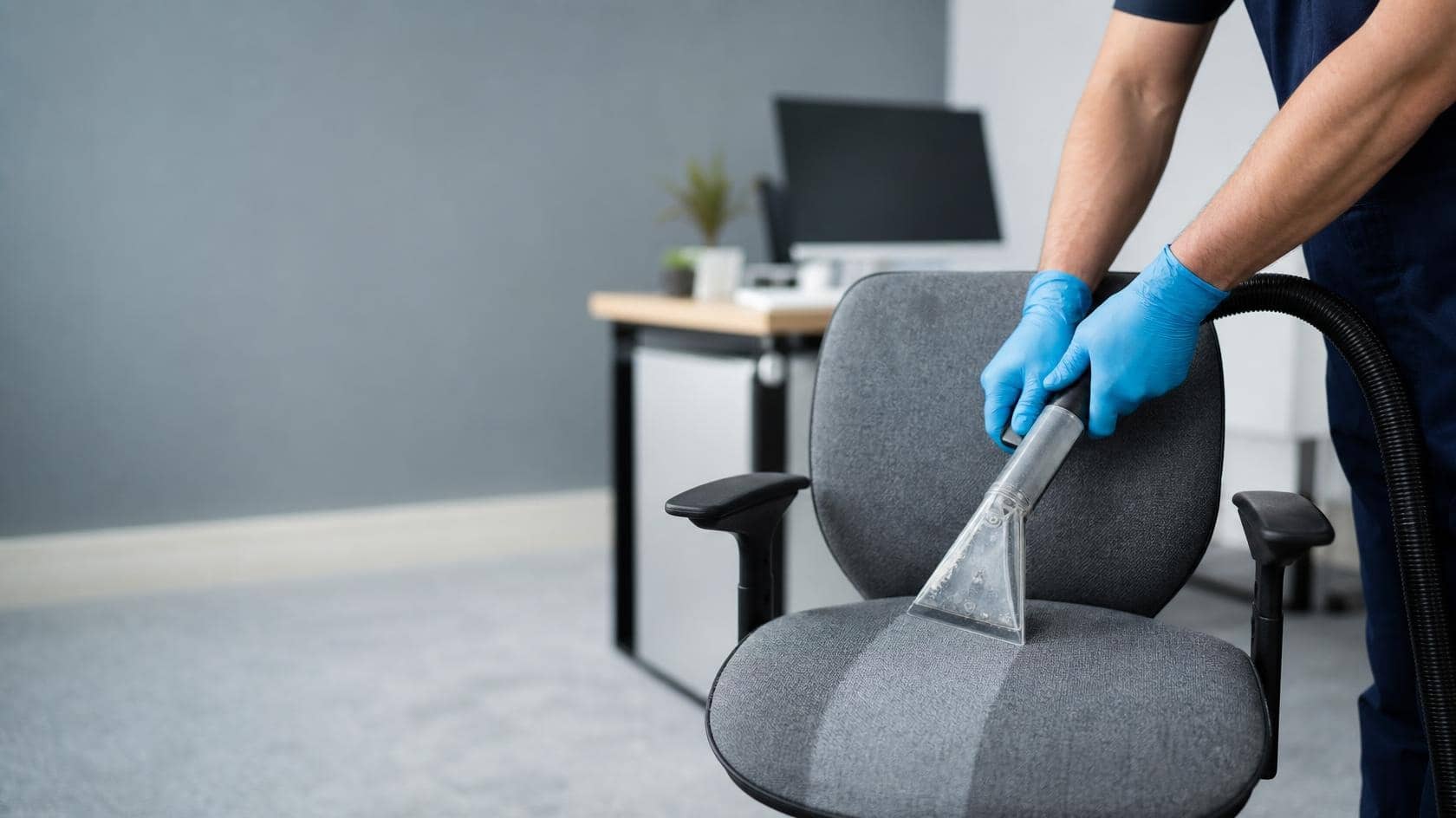
Furniture Is Replaced Far Sooner Than It Needs to Be
Most office furniture is discarded looking tired rather than broken — and tired is usually reversible.
Furniture Cleaning
Tired Is Usually Reversible
Commercial furniture rarely fails structurally. Task chairs, soft seating and fabric partitions are replaced because they look worn, and that appearance is largely accumulated soil rather than damage.
Fabric collects body oils, food residue and airborne dust continuously. Because it happens gradually and evenly, nobody registers it — until a cleaned chair sits beside an uncleaned one and the difference is obvious.
Periodic upholstery cleaning addresses that, and it also removes the abrasive grit that works into the weave. That grit is what actually wears fabric: every time someone sits down it grinds against the fibres. Removing it periodically slows genuine physical wear, not just the appearance of it.
The grit in the weave is what wears the fabric.
Furniture and fabric we clean
- Task and office chairsSeat, back and arm contact points where body oils and soil concentrate most.
- Soft seating and loungesBreakout, reception and waiting-room seating, including under cushions.
- Fabric workstation partitionsScreens and dividers that collect dust and hand marking along their edges.
- Acoustic panelsWall and ceiling-mounted fabric panels that trap airborne dust over time.
- Waiting room furnitureHigh-turnover seating in reception and consulting areas.
- Fabric and leather finishesMethod matched to the material — leather and vinyl need a different approach from woven fabric.
- Ottomans and modular seatingBreakout furniture and modular pieces, including seams and joins.
- Spot and stain treatmentTargeted work on specific marks, best addressed before they set.
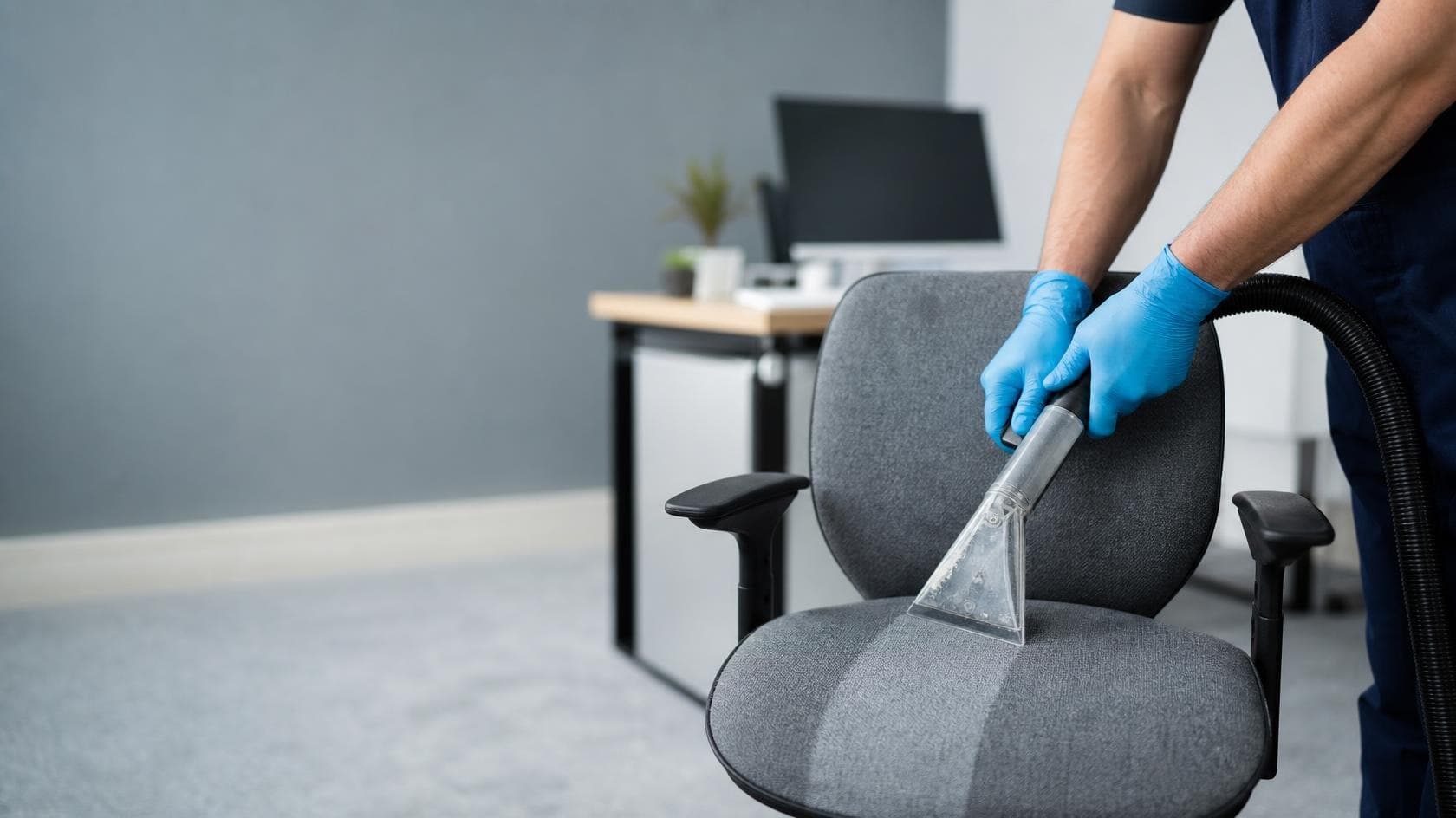
“The grit in the weave is what wears the fabric.
Benefits
What regular upholstery care does
Defers replacement cost
Cleaning a chair costs a fraction of replacing it, and most replacement is driven by appearance.
Lifts overall presentation
Furniture occupies eye level. Tired seating undercuts an otherwise well-maintained space.
Removes abrasive soil
Grit ground into the weave physically wears fibres. Removing it slows real deterioration.
Commonly arranged by
How It Works
How we clean upholstery
Check the material
Fabric, leather and vinyl need different methods. We identify the material and any care labelling first.
Vacuum and pre-treat
Loose soil and grit are removed, then specific marks are treated before the main clean.
Clean and extract
Method suited to the material, with moisture controlled so the piece isn't over-wet.
Dry before use
Furniture is left to dry properly — scheduled after hours or over a weekend where practical.
FAQ
Common questions about furniture cleaning
More Services
Build a Complete Cleaning Program

Ready to Get Started?
Talk to us about building a cleaning program for your workplace. No obligation — just a conversation about what your business needs.