Sanitisation for High-Touch Surfaces and Shared Spaces
The surfaces most people touch are rarely the surfaces that look dirtiest. Sanitisation targets them specifically, on a defined schedule.
Sanitisation
Cleaning First, Then Treating
Cleaning and sanitising are two different steps, and the order matters. Applying a sanitiser to a surface that has not been cleaned first is largely ineffective — soil and residue prevent it from working as intended.
So our sanitisation work is always sequenced: the surface is cleaned, then treated, with the product given the contact time it actually requires rather than being wiped straight off.
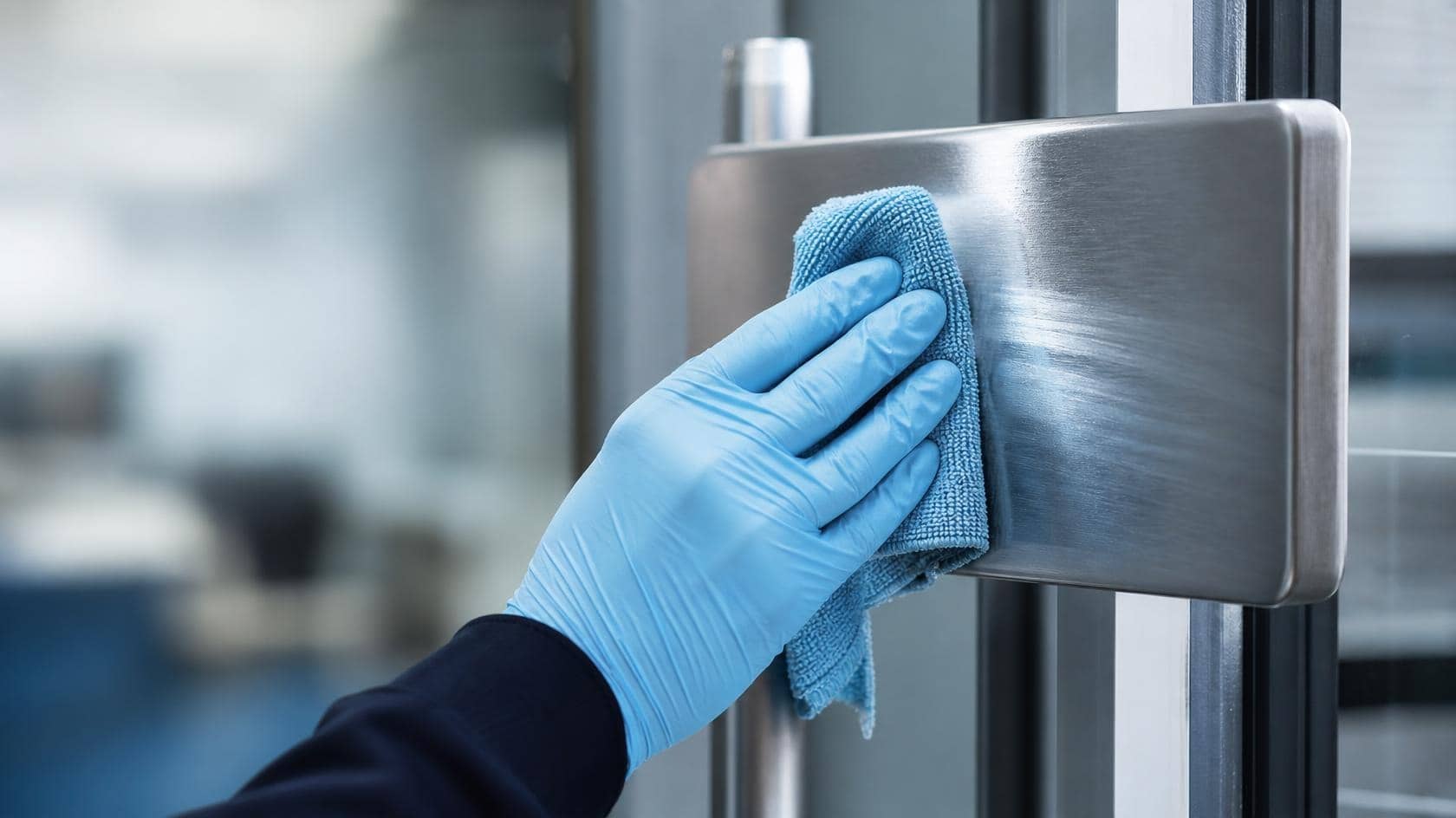
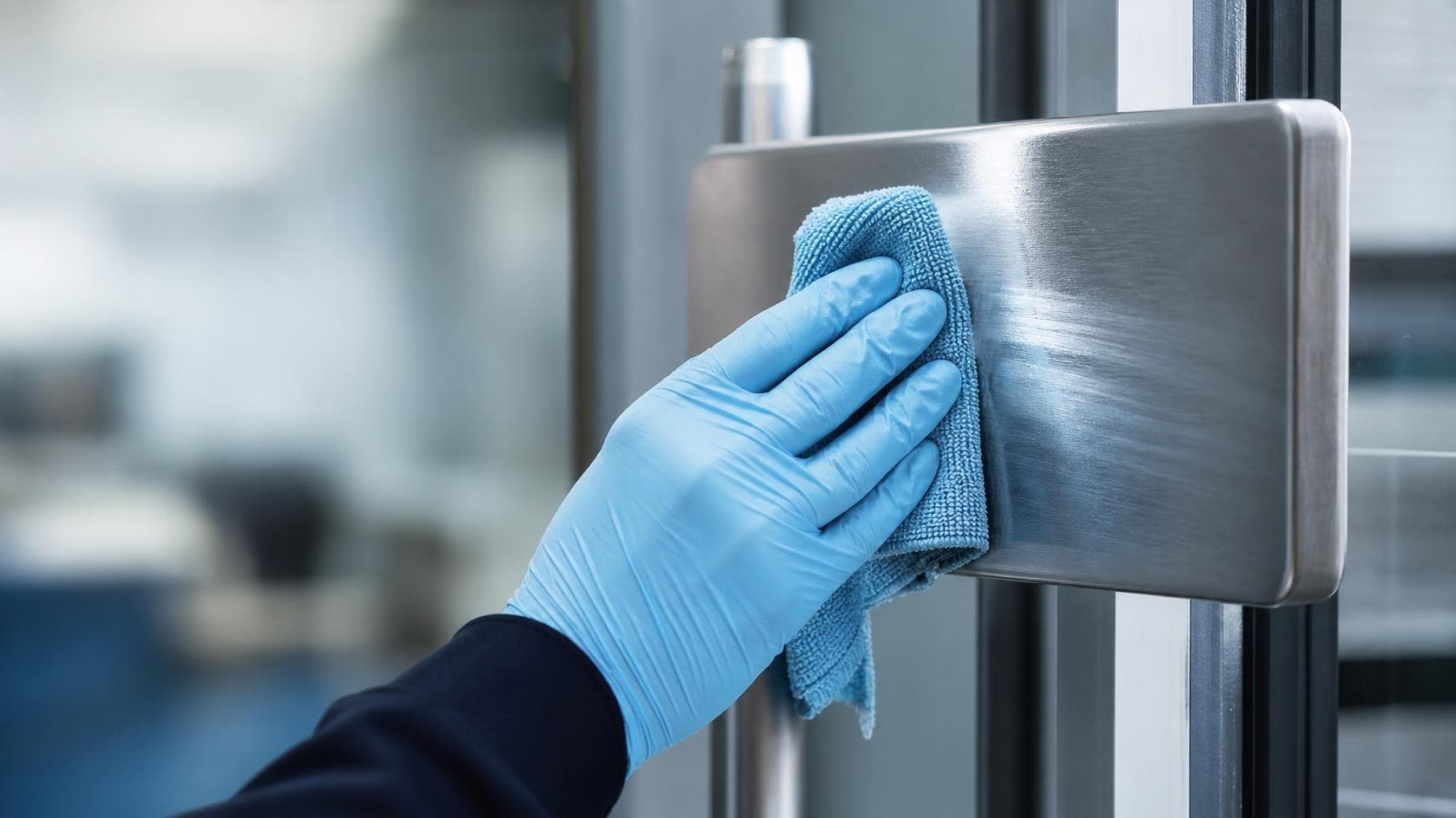
The focus is on touch points rather than floor area. Door handles, push plates, lift buttons, light switches, shared desks, phones, kitchen surfaces and washroom fittings are where contact concentrates, and they are what a sanitisation program is built around.
Clean the surface. Then treat it. In that order.
Surfaces and touch points we treat
- Door handles and push platesEntry doors, internal doors and any handle in shared circulation areas.
- Lift buttons and call panelsInterior and landing panels in buildings with lift access.
- Light switches and controlsSwitches, thermostats and wall-mounted controls throughout the site.
- Shared desks and hot desksWork surfaces used by more than one person, including edges and arm contact points.
- Phones and shared equipmentHandsets, shared keyboards, printers and equipment control panels.
- Kitchen and breakout surfacesBenches, tap handles, fridge and microwave handles, and cupboard pulls.
- Washroom fittingsTaps, flush controls, dispensers, locks and door furniture.
- Handrails and stair railsCirculation handrails in stairwells, corridors and ramps.
“Clean the surface. Then treat it. In that order.
Benefits
Why sanitisation is scheduled separately
Targets contact, not floor area
Effort concentrates on the points people actually touch rather than being spread evenly across the site.
Set to your frequency
Daily for high-traffic reception and washrooms, less often for low-use areas — matched to how the space is used.
Defined and repeatable
An agreed list of touch points so the same surfaces are covered on every visit, not whichever ones look dirty.
Particularly relevant for
How It Works
How a sanitisation visit works
Map the touch points
We walk the site and list the surfaces where contact actually concentrates, area by area.
Set the frequency
Different areas get different frequencies — reception and washrooms rarely need the same schedule as a quiet back office.
Clean, then treat
Each surface is cleaned before the sanitiser is applied and given its required contact time.
Review and adjust
As occupancy or use changes, the touch-point list and frequency are revised rather than left fixed.
FAQ
Common questions about sanitisation
More Services
Build a Complete Cleaning Program
Ready to Get Started?
Talk to us about building a cleaning program for your workplace. No obligation — just a conversation about what your business needs.